ECHO SEVEN
“Echo Three to Echo Seven. Han, old buddy, do you read me?” “Loud and clear, kid. What’s up?”
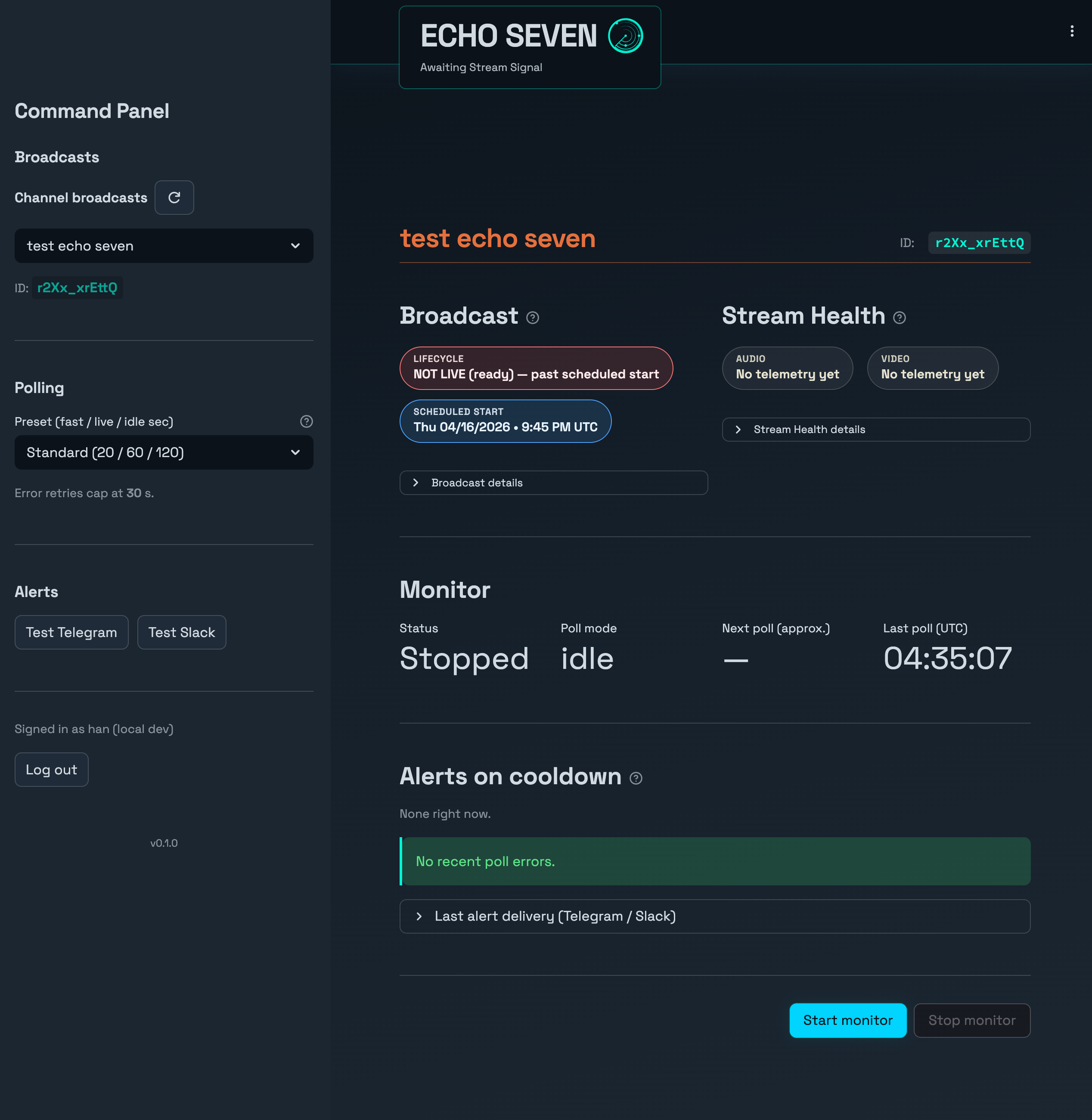
ECHO SEVEN is a personal YouTube live-stream monitor, built with Streamlit, the YouTube API, and Google/YouTube Auths. It provides real-time insights into live-stream performance, and stream health indicators such as audio/video signal quality.
My stream is broadcast to YouTube via OBS, and ECHO SEVEN monitors the stream health in real-time, providing insights and alerts to ensure a smooth streaming experience.
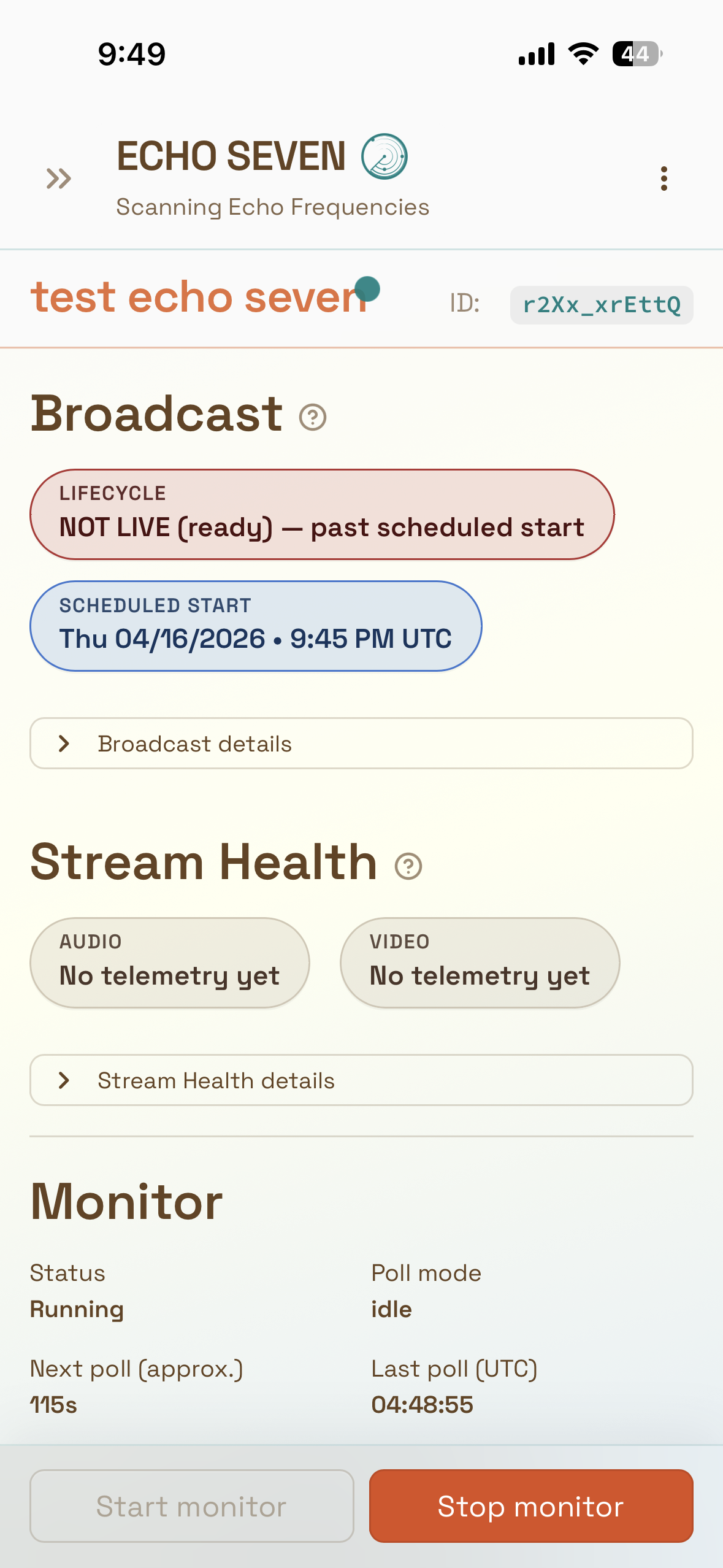
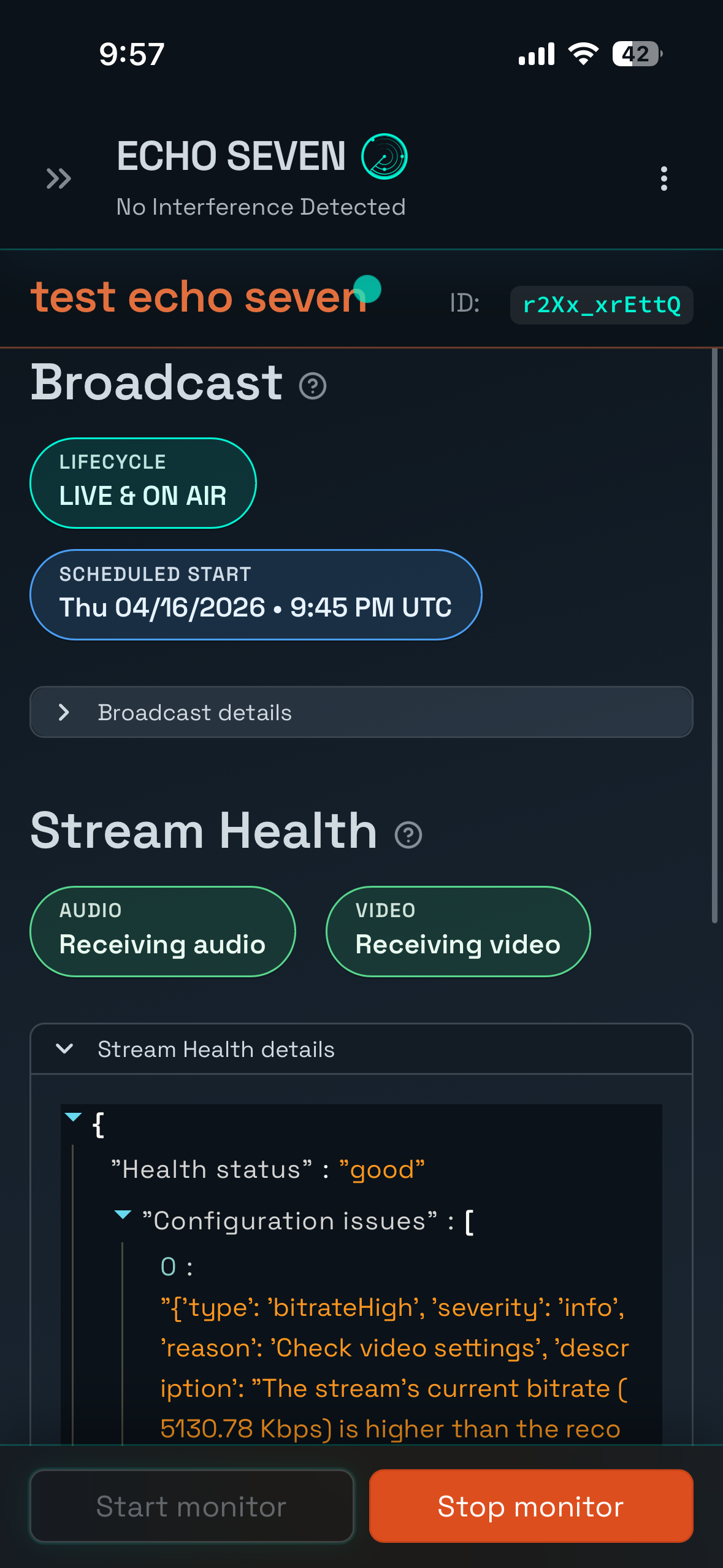
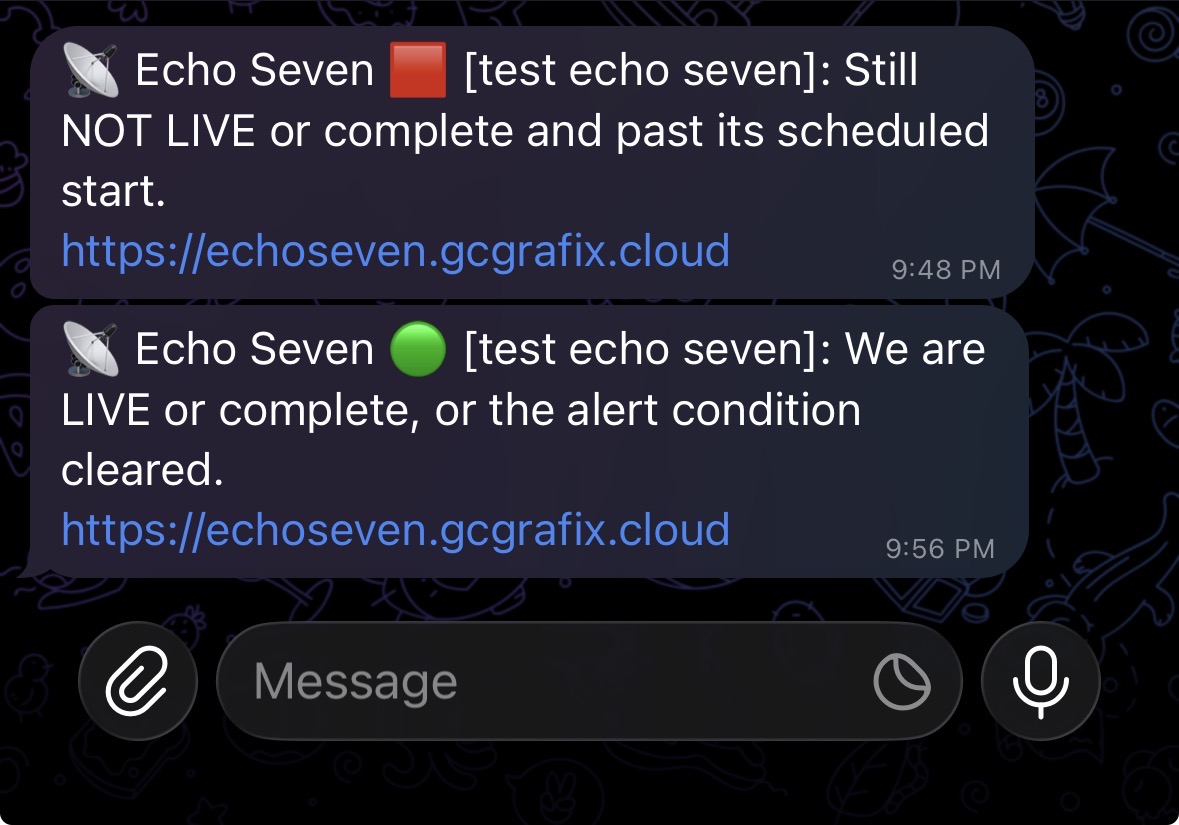
I get alerts to my Telegram and Slack channels if there are any issues with the stream, e.g. missing or muted audio and video quality degradation, so I can quickly address them and keep the stream running smoothly.
This is a project in-progress. I’m working to include:
- OBS integration via WebSockets and secure tunneling for real-time control
- Viewer metrics and engagement insights, e.g. viewer count trends, etc.
- User preferences and custom alert configurations, e.g. set custom alert messages, choose which metrics to monitor, etc. from the front-end
- Agent automation for proactive stream management, e.g. auto-control devices in OBS based on stream health indicators, auto-restart stream if critical issues are detected, etc.
Since this is a personal project, and the stream I manage is private, ECHO SEVEN is not publicly available, but if you're interested in building something similar or want to learn more about how it works, feel free to reach out!
The Meaning of “Echo Seven”
In The Empire Strikes Back™, Echo Seven was Han Solo’s callsign while he was on patrol on the ice planet Hoth.
- The Context: While Luke Skywalker (Echo Three) was scouting another area, Han was Echo Seven.
- The Mission: His job was checking sensors and scanning for life signs to ensure the safety of Echo Base.
- The Iconic Line: The name comes from the radio exchange: “Echo Three to Echo Seven. Han, old buddy, do you read me?” to which Han replies, “Loud and clear, kid. What’s up?”.
I chose “Echo Seven” because it mirrors exactly what my app does: it sits “out in the cold” (the cloud), monitors sensors (bitrate/audio), and reports back “loud and clear” when you check in.